Podcast: Play in new window | Download
Subscribe: RSS
EPISODE 21 – Addressing Fears and Feelings
We all have fears and feelings. The emotions that we feel impact our thoughts, feelings, and actions. They act like a beacon or a lighthouse, letting us know how the world is going on around us. Our emotions are our sensor. But it’s important to develop self-awareness so that you can learn and know yourself and be able to recognize and identify the thoughts associated with the emotions that you’re having. Your beliefs and your belief system (which includes many patterns and behaviors that you learned in childhood and life’s experiences) are how you perceive and interpret the world around you.
 Some people believe that if they have a new car, new house, new clothing, or a new relationship that they will be happier than they are currently. Happiness is a state of mind. Happiness is a choice.
The beliefs you have our choice… You can either choose to believe them or release them – free yourself of the burden and pressure of holding out for happiness until something better comes along.
Why not choose to be happier right now?
Simply by doing more of what makes you happy.
Do you know what makes you happy?
You may be wondering what this has to do with addressing fears and feelings. This is where I jump in because you can’t be happy and fearful at the same time so it’s important to address the fears you have in the feelings that you’re feeling.
People often have fears of success, failure, rejection, or illness. There is nothing more than false evidence appearing real.
- Identify what you’re afraid of.
What emotions are you feeling?
What triggered them for you?
“There is only one thing that makes a dream impossible to achieve: the fear of failure.”
― Paulo Coelho, The Alchemist
- Focus on what you have control over. You have control over yourself and perhaps the environment that you’re in.
- Question your beliefs. Ask yourself questions about your assumptions and the beliefs that you have.
If you are afraid of achieving success, you may be self-sabotaging yourself.
What are you afraid of?
What beliefs do you hold around success?
Do you believe success should happen in a certain way?
Who says?
There are many routes to success. As long as no one is harmed or going to jail, you can take as many routes as you want.
“Our deepest fear is not that we are inadequate. Our deepest fear is that we are powerful beyond measure. It is our light, not our darkness that most frightens us. We ask ourselves, ‘Who am I to be brilliant, gorgeous, talented, fabulous?’ Actually, who are you not to be? You are a child of God. Your playing small does not serve the world. There is nothing enlightened about shrinking so that other people won’t feel insecure around you. We are all meant to shine, as children do. We were born to make manifest the glory of God that is within us. It’s not just in some of us; it’s in everyone. And as we let our own light shine, we unconsciously give other people permission to do the same. As we are liberated from our own fear, our presence automatically liberates others.”
― Marianne Williamson, A Return to Love: Reflections on the Principles of “A Course in Miracles”
Why are you holding yourself back?
Are you afraid to fail or make a mistake?
Guess what? You are farther ahead than those who do not even try.
- Mitigate your risks. Do your homework. Learn as much as you can about achieving your goal.
Have others done what you want to do?
Talk to them. I can hear it… “Why would they want to talk to me?”
People like to share how they achieve success. They will even share stories of their mistakes and failures. Why not learn from others mistakes so you don’t repeat what they have done. Save yourself some heartache.
- Shift your thinking-failures and mistakes are learning opportunities to improve and grow. They make us stronger. Take a listen to episode blank challenges make us stronger. [EPISODE 16 – Challenges Make Us Stronger]
Some people have a great fear of rejection. As much as we want to hear a “yes”, a “no” can be a great thing. If someone is not interested or not the right fit- you are not wasting your time. If someone says no- it may mean not the right time, not enough money, not enough information.
- Discover what their “no” is by asking questions. Get more information.
For others, the fear of illness paralyzes them from taking action. There are risk factors that you can control when it comes to your health and those you cannot. Worrying about what could happen is a waste of time. Imagine what you can accomplish if you use the time you worry about something to be proactive. Some of the risk factors that you can’t control include your age genetics race and for the most part gender. Risk factors that you can control include your waistline, level of stress, eating habits, and level of activity. Get a yearly physical examination by your physician. Get your eyes checked and your teeth checked. Take care of your health. Listen to your body- if you feel different than what your baseline is for you-you should get it checked out.
- Be proactive in taking care of your health that you can live long and prosper.
Address your fears and manage your emotions so that you can ask the right questions to achieve your dreams and make them become your reality. You never know the life you change in the process. Often the person’s life you change is your own.
DEBRA KASOWSKI, BScN CEC is an award-winning best-selling author, transformational speaker, blogger, and Certified Executive Coach. She has a heart of a teacher and is certified in Appreciative Inquiry and Emotional Intelligence. Her writing has been published in a variety of print and online magazines. Debra Kasowski International helps executives, entrepreneurs, and organizations boost their productivity, performance, and profits. It all starts with people and passion. Sign up the Success Secrets Newsletter and get your free mp3 download today! www.debrakasowski.com
Time 11.22 min
 Commitment is about taking action and getting results.

 I can talk about this topic for days but I’ll make sure that we streamline and for the purposes of this podcast. It has been demonstrated that people who were physically fit tend to eat better, have better habits, and they missed fewer days of work because they’ve developed a high resistance to illness because their immunity is strong. Physical fitness provides many benefits and it is more than looking good in the mirror. I once read an article about how our brain functions during exercise and as soon as we’re done exercising the blood flow shift to the front of the brain where we are better able to focus and concentrate. So if you have something that requires your focus and attention you may want to go for a brisk walk before or run or some form of physical activity before you jump in to your work. People who are active fit tend to be more accepting and tolerant of themselves and others. They are productive and better problem solvers. They retain information better than those who are not active. They expressed having low levels of stress and fatigue.
 I used to have a phrase that I used to say, “I will sleep when I’m dead”. If you overwork yourself and don’t take care of yourself that day may come sooner than you think. Plan to get at least 6 to 8 hours of sleep per night if possible. Develop a routine before you go to bed. Turn off the TV and electronics at least 30 min. before going to sleep so that you can calm down your mind. You will have a sharper mind and think much clearer about the decisions that you have to make on a regular basis.
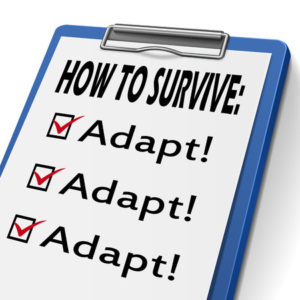 The one constant in everyone’s life is change. We are all faced with changes and challenges on a day-to-day basis. One of the greatest challenges that leaders within organizations face is being able to keep up with their workloads while putting out fires that seem to arise. They are taken away from some of their critical work to focus intently on performance issues. Managing people and working with people can sometimes be draining especially when you’re faced with resistance and lack of awareness. Sometimes it feels like no matter how much effort you put into something that you are unable to achieve what you hope to. At times this can be disheartening for a leader to lead because they may lose sight of their focus and the meaning of the work that they were driven to do. Don’t give in and don’t give up! Adapt!
 Leaders know that it’s important to build and nurture a network of relationships before you need them. When you are in crisis or faced with the challenge, you need to have that support immediately and if you don’t have it is more challenging to get through the tough times. When you build relationships, people are quick to reciprocate and support each other lessening the challenges.