Podcast: Play in new window | Download
Subscribe: RSS
Episode 17 – Harness the Power of Momentum
There are no limits to what you can achieve if you stay focused on what you are trying to achieve. You need to believe the impossible is possible for you. Your results may be better than you expect. Success has no guarantees; each action you take starts creating a momentum. If you stop taking action, you stop the momentum.
“Always work hard. Intensity clarifies. It creates not only momentum, but also the pressure you need to feel either friction, or fulfillment.”
— Marcus Buckingham
 During my coaching program, we learned about Creative Tension – It moves us to take action. It helps us get out of our comfort zone and stretch us. Challenge us.
Why do we need it? What does it do?
Momentum helps us:
- Push through and overcome obstacles. You may have heard about runners or even swimmer pushing through a certain distance to push forward what they may not have thought possible exclaiming, “What else can I do? What else can I do?” What else is possible for you?
- Increase your motivation and confidence in your abilities. It helps you to try new things!
You are responsible for creating it through consistent actions. A rapid succession of successes and lessons drives momentum. Energy increases; it will be natural for others to want to follow you. You will become magnetic. You will start to inspire others around you.
Momentum is ignited when you have a clear vision – you know what you want to achieve, you are able to articulate and share your vision, and you can enroll others in your vision.
 Do you want to get more clarity? Read my book GPS Your Best Life
Believe in your ability to make things happen. Your confidence, energy, and enthusiasm with excite others around you.
You are probably thinking to yourself – but how do I create a momentum – especially when times are tough or you are feeling challenged more than you think you can handle.
I want to share with you some of the ways that have worked for me and some of the clients I have worked with.
- Challenge yourself – Be committed to continuous learning, stay curious and have a learner mindset. Try new things regularly.
- Make a rule to quit complaining, blaming, and stop making excuses. You either get results or excuses.
- Reduce your distractions. Declutter your space or your email. Clear whatever is in your way.
- Be grateful for what you have; the more you will have to be grateful for.
- Celebrate your successes – little things lead to big things! It will drive you to take more action. Breath in and acknowledge the successes before moving on to the next thing.
 Deliver value and look for ways to exceed expectations. You will generate excitement in others and they will be grateful and share their experience with you – with others.
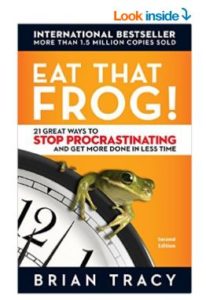
- Do you least favorite activity first – EAT THAT FROG – Brain Tracy
Everything will move so much quicker with the momentum.
- Set Milestones – You create anticipation. You may even meet goals quicker.
- Measure your outcomes – what gets measured gets managed.
- Fake it until you make it – take the actions you need to get to where you want to go. Who is a leader you admire? How can emulate some of the actions that they have taken to achieve success – do your homework. If you want to be a great leader, start being one now.
- Make a plan – Work the plan. Otherwise, you will be chasing butterflies. Do you due diligence and your resources.
- Don’t forget to dream – Sometimes when people are too realistic to the bone, it drags people down. Dreams can propel you further rather than looking at your current circumstances.
- Follow up with people you have met at events or make inquiries – you will be surprised when you connect with others. They energy rises and people take an interest in what you are doing.
 What happens when you stop running on a treadmill or riding a bike?
You stop moving – you fall off.
Worry and doubt can paralyze you from taking forward action. They drain your energy. Challenge yourself – test your theories. Ask questions. Gain knowledge – but don’t stop unless you know you are in danger.
No one is going to jail or getting hurt or killed in the process chances are whatever happens you can course correct.
We all start somewhere. There have been many successful people who did not start with any resources – no network of people, no money, no knowledge, did not know English or a language of the place they settled in. They built it and so can you.
“Always do your best. What you plant now, you will harvest later.” — Og Mandino
Success is not about how many resources you have; it is about being resourceful and leveraging your resources in the most effective way. Focus on taking action and over time a compound effect with occur. If you are focused only on short-term activities to get immediate results, you will lose momentum quickly especially if you do not set a new target that stretched you.
Your efforts make a difference in how you feel about your progress and what you are going to achieve.
Let your efforts multiply!
Success comes from taking the initiative and following up…persisting…eloquently expressing the depth of your love. What simple action could you take today to produce a new momentum toward success in your life?
— Tony Robbins
You need to continually set new challenges to learn and grow. Acknowledge how far you have come. Reflect on what you can do better and work to improve.
DEBRA KASOWSKI, BScN CEC is an award-winning best-selling author, transformational speaker, blogger, and Certified Executive Coach. She has a heart of a teacher and is certified in Appreciative Inquiry and Emotional Intelligence. Her writing has been published in a variety of print and online magazines. Debra Kasowski International helps executives, entrepreneurs, and organizations boost their productivity, performance, and profits. It all starts with people and passion. Sign up the Success Secrets Newsletter and get your free mp3 download today! www.debrakasowski.com
Time: 16:31 min
 Challenges are a part of everyday life. A challenge is something that pushes you out of your comfort zone. It can be something you challenge yourself with such as a goal or it could be something presented to you such as learning something new, getting a handle on finances, acquiring your next client, or seeking a promotion. Some challenges are easier than others. Some challenges knock us down for the count. Think about how many times you get up to face a challenge – that will determine whether or not you will push through it.
 There was a personal challenge I faced when swimsuit shopping with my daughter. I had sent my daughter to go and purchase herself a swimsuit for a surprise trip. I was unable to go with her. She came home a tossed the bag to me and I did not think anything of it. She did not even show me what it looked like until we were leaving and then I realized that there was a $200 + price tag to this swimsuit. I was like, “What?” I am sorry I do not understand what 16 year old needs a two hundred dollar swimsuit. Anyhow, we ended up going on our trip and did not end up going swimming anyway but I knew a swimsuit you cannot return.
 Meanwhile, I was quite frustrated as I was waiting for my daughter to finish up so I started to talk to the clerk. I proceeded to tell her about how I was feeling and how I was boiling inside. If I felt this energy, I could not imagine how and if they felt it. I began to share the story of what happened when my daughter had come for a swimsuit. The young lady at the till was phenomenal. She said “You should not have had that type of experience that is not how we work here.” She took my information. I informed her that we were leaving the next day on vacation. I told that I would not be able to deal with this right now. She said that it was okay and that she would speak to her manager to see what she could do for me.
 What I want to focus on today is helping you stretch out of your comfort zone and thinking about shifting from any impossible thinking that you might have to into the world of possibility. You want to be in that dream state to be able to explore what is possible. This is when your mind is like a popcorn machine – all those kernels popping around like all the ideas coming out of your head. I love to brainstorm. It is one of my most favorite things to do next to mind mapping. Your dreams are only limited by your mind. I am not talking about fluff dreams. I am talking about concrete dreams that you turn into goals and take steps to actually get to where you want to go. You tap into your full potential.
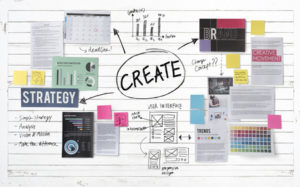 Create a vision board. A vision board is just not a collage pretty pictures; it is something that allows your mind to expand. It is a collage and not a piece of art. I do not want you to frame it and thinking this is beautiful. I want you to use it as a tool and then set goals based on what is on your board. Break your goals down into smaller pieces. Check out of goalsetting and make plans to start taking action toward what it is you truly want to happen to those possibilities actually making them become reality.
 Appreciative Living is appreciating your life. It is about appreciating the BEST in the present moment. What are 2 to 3 of your best experiences that you’ve experienced recently? Think about who was involved. What made it so great? Today’s podcast is more about asking questions. It is about getting you to reflect so grab a journal or piece of paper. I want you to take some time to think about this. Of course, I don’t want to do this while you’re driving but I would like you to re-listen to this podcast will make sure that we will not make it go too long today. I want you to take another listen to some of the questions, I will repeat a few things here as I really want you to pay attention.
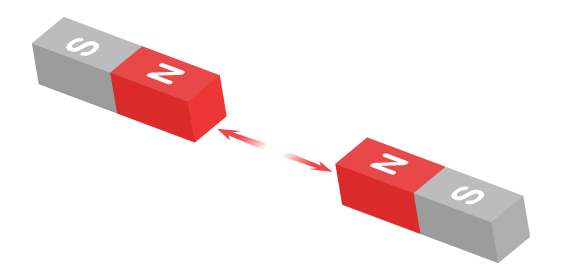 better first impressions- When you are speaking positive and you are excited about your day versus someone who’s got slouched posture saying “Hi, how are you?” (say it in the Eeyore voice from Winnie the Pooh). Do not put that energy out there. You don’t want to be around them. You start to repel is like a magnet. You just want to walk away from that negative energy.
 Get Rid of or Cut the Drama I don’t like drama. One of the things that I’m telling about the drama part is, if something is not broken – with a relationship or you have some negative thoughts about something. Don’t jump in and start accusing somebody of something and getting into petty fights. A lot of the disagreements the people get into are over the little things that really don’t have a lot of significant. If you just open up the conversation, you find out that it’s not as difficult or a conflict as you what you thought it was.