Podcast: Play in new window | Download
Subscribe: RSS
EPISODE 12 – EPIC WAYS TO SEIZE YOUR HAPPINESS
What does happiness have to do with leadership, business, and human potential? When you are in a happy state, you change the actions that you take. You change the way you approach things. You change your perception of different things, when you’re in a happy state of mind.
“For every minute you are angry you lose 60 seconds of happiness.”
Ralph Waldo Emerson
I really don’t want you to lose out; I want you to become the leader that you were meant to be. Lead a fulfilling life and work business and at home. We are going to talk about the ways to seize your happiness so you might want to grab a paper and pen and if you are you driving in the car listening to this podcast you can go to the show notes and download your epic ways that you can seize your happiness.
- Train Your Brain. Start with training your brain. Happiness is truly a state of mind. To be able to practice mindfulness and to be in a place where you are able to recognize smallest of things that contribute to the world today. When we talk about mindfulness, it’s not just about sitting in meditation and clearing your mind you so you have this blank slate. By being mindful, it is being able to recognize the small things: the breath that you take, the smell of a flower, to interpret someone’s emotions way when you’re having a conversation with them – being able to be perceptive of what’s going on around you.Some of the ways to practice mindfulness are meditation. There is prayer – by being able to feel like you’re connected with the universe or God or whatever that being is for you – something greater. Some people practice mindfulness through yoga, through just doing some deep breathing exercises, and recognizing how their body feels and being able to recognize these things around you – how you interact with your environment.
- Getting Enough Sleep. Many people are running on so little sleep. I use to say this phrase that “I would sleep when I’m dead.” However, when you really think about it if you wear yourself out by working 60 to 80 hours a week how long will that be sustainable? Are you truly showing up in giving your best self?What happens is when you are exhausted, your fuel tank decreases. You’re not able to fully give the full horsepower of what your engine of who you are is able to give. When you get enough sleep, you actually less triggered by the events around you so when something does not go right you are able to be more responsive than reactive. Our bodies do need to rest to allow our minds and cells in our body to actually repair from the work of the day. By allowing yourself at least 7 to 8 hours of sleep, you’re giving yourself a way of clearing any mental fog that “brain fog” so you can think clearly and make decisions well while being able to assess information and facts before you.
- Practice Gratitude. People take for granted that we have all the things that came into our lives. Take a look around you everything you have in your life change your life by choice. By saying by choice, the more you are grateful for something, the more that happens to show up in your life, more things for you to be grateful for.
 There is a book that I read too long ago called, 365 Thank Yous: The Year a Simple Act of Daily Gratitude Changed My Life by John Kralik.He changed his life. This book is about this individual is kind of a grumpier kind guy stressed out and he decided that he needed to change his life. What he did every day for 365 days of the year, is that he sent out the hand written a letter of acknowledgment to different people who are impacted or his life in some way. His whole life shifted. Part of it was his attitude and how he viewed things. Now he started to recognize the things he was grateful.
I recommend to clients that I work with that when you stop and recognize some of the things that you are grateful for, you start to notice more things. The list gets longer but I do recommend you at least acknowledge three things that you are grateful for each day. Make as simple as a smile, someone held the door open for you, or you just recognizing that someone complimented you today. We often move onto the next thing and failed to recognize, some of the small things that really have enhanced our lives. This goes back to being mindful but being able to recognize how all the small things really contribute to the bigger picture – the person who you become and who you have yet to be.
- Focus on People NOT Stuff. Focus on building and nurturing relationships and not on material goods and things. When you focus on the relationships, you add a whole new richness to your life. You learn about people. You learn what motivates them. Zig Ziglar had a saying that if you help enough people get what they want, you will get what you want. You will accomplish your goals as you help them.Don’t focus on the stuff. Stuff can be purchased. Relationships are not something to be purchased. They are something to live, to enjoy and to share.
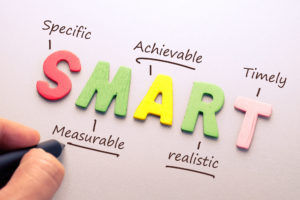 Set Meaningful Goals. Many people out there don’t set goals. Only the top to 3% of people, set goals on a regular basis. When you set goals for yourself, you want to use the SMART goal method which is: S – Specific, M- Measurable, A- Achievable, R- Realistic, and T for Timely. When you use this, what you trying to do is be specific, what is it that you want to achieve, what you want to achieve and by when the timestamp because without that it becomes a wish; it becomes a dream. It something that you’re not actually working toward so we will be able to measure it; give it a timestamp as to when you might want to do this by. It’s commitment. The next one is achievable. Is this achievable within the time frame that you are trying to do this? Is this something you can actually do? Is this realistic? Is it something you can do within the time frame you provided for yourself?R is for realistic. People say why not lose weight in 24 hours. As you can see that’s not very realistic unless you’ve undergone some type of surgery. It’s about thinking about if it is realistic in the time frame. Maybe you need to adjust your time frame or test it out and then re-adjust- it happens. Timely, we want to be able to measure it. We want to go back to the time date stamp as to when you’re going to achieve it. Some people set goals that you cannot actually measure it’s not something they can measure per se.What I like to recommend is using a rating scale of 0 to 10, 0 (lowest point) is about how you’re feeling about a subject and 10 is that you are at the top of your game. Let’s say you are at a 5/10, and then you decide what actions you are going to take to go from a 5 to a 7/10 two weeks from now. Thinking about those strategies and what you need to have in place and who you need to connect with. These are how we say to breakdown and chunk down your goals. You have to really stop and think about all the things that can help you get to where you want to go. Work backward, so if you know where you’re going in the time frame, what are the steps you need to take? Break it down into smaller pieces thinking about the resources, how much time you need to a lot to it, and how much money might need to go into it. What are the resources? What is your grit power? What is the work that you need to put in to get this done? Maybe you are going to achieve it earlier and need to set a new goal to up your game or you might need to adjust some of the strategies.
Think about the strategies. Who else do you need to get involved in helping you get to where you want to go? What happens, when set meaningful goals, is that all of a sudden you create this excitement; you create energy around you because you have something that gives you momentum something you look forward to achieving. I was sharing with people in my newsletter that I had a friend who challenged a few people to set a swim goal and I had set it for 4000 m 10 weeks down the road. I figured 400 m per week was reasonable because I like to participate in other activities. I thought I usually the average about 300-400 meters then I am out of the pool. I became so excited so focused on how my rhythm was or how my stroke was that I achieve that goal within four weeks and then my son said to me, “You know what Mom, I don’t think you’re working hard enough” my mouth just dropped.” I replied, “Okay, you’re not the one who’s swimming so I decided that I would up the game. I had six more weeks to go so I thought I can swim 6000 m more. I finished again a little bit early because of the excitement of it and I pushed myself to do something that I haven’t done in over 11 years is1500 m in one stretch to conquer the 10,000. It felt phenomenal to be able to achieve something that I haven’t done a long time but to set that goal. When you do this, you are really able to create a momentum in your life and it increases your happiness because you know that you’re reaching these the small milestones along the way.
- Spend time with family and friends. Surrounding yourself with people who support you. Spending time with people- family and friends sharing in celebrations, birthdays, and holidays really connecting with people and accepting people unconditionally for who they are. One thing I want you to keep in mind, as a leader is no matter of what you are working with her when you are speaking with, remember that they’re all part of their own journey. Everybody isn’t doing the same as you or in the same place as you. They might want to learn from you or be mentored by you. People may say, “Why would someone want to learn from me?” Everyone has someone that they look up to. Think of the kids in school fourth-grader looking up at the sixth-grader thinking that there like a God because they have gone through some of the milestones and journeys and just excited to be a part of it. Spend time connecting with people and getting to know about people. What makes the tick? What gets them excited? What are their hopes and dreams? When you really take time to get to know somebody’s dream that’s when you are ultimately connecting with people
- Forgive Others. When we talk about forgiveness, I want to keep in mind that forgiveness is the process. It is not that you’re going to forget what happened to you. By being able to forgive, you build stronger relationships, you’re able to express how you feel, and put you in a greater place and state of mind. Psychologists talk about forgiveness as being a conscious deliberate decision to release those feelings of resentment. There may be anger or frustration.
 A person I met and the totally adore is Dr. Shawne Duperon. She is a six-time Emmy award-winner. She was nominated for the Nobel Peace Prize for her work with Project Forgive and she uses this in leadership to help teach leaders the importance of forgiveness. The documentary coming out in January 2017 or later in 2017 I believe that is the date it is rolling out. She has researched good gossip is part of her Ph.D. She is an ultimate communicator and public speaker.Her message is on how important forgiveness is. You can learn more about this project by going her website www.projectforgive.com to learn about how you can help support this project because of what it’s doing. The documentary was triggered by a hearing about an accident that happened to killed part of a family. She knew the family that was affected but she also knew the person who caused the accident. What happened is that these people were able to forgive each other and it had sparked is like a domino effect of sharing these stories of how people work to get passed it, and move forward from some of the most painful places in their lives. To be able to forgive – to be able to move forward. They’re not going to forget what happened but they’re going to release feelings that are holding them back from moving forward with enjoying their lives and being happy. It is truly a phenomenal gift. If you get a chance go to www.projectforgive.com, check it out and learn more about this very powerful movement.
When forgiving others, you may not forget but remember that other people make mistakes too. We get angry; it’s like we’re expecting people to be perfect, forgetting that there are mistakes that others make.
- Do Things for Other People. You feel greater happiness than you are able to do things for other people; sometimes the best thing to do when you’re wallowing in your stuff and you feel like things are not going the way you want them to is get out of your own space. Go out and volunteer. Go out to places and help people achieve things that they need, whether it’s a women’s shelter or to child center that needs your support, or going to the Humane Society – for those animal lovers listening to the podcast. Get out your own space and do some good in the world instead of keeping that focus on yourself. When you are focusing on yourself, you’re sitting in a space that doesn’t allow you to move out of that space. You keep looking at the problem versus a solution. When you take actions to get out of that space, you are able to clear your head and really see some of the happiness in your day.
- Finally, my favorite because it is free to give a smile. Not a fake smile – people. I want your smile to go up to your eyes so your eyes twinkle. You can tell a true smile by how someone’s eyes I look.
There are no shortcuts to happiness. Happiness does not come to you; I want you to remember, it comes from you. You need to take action steps to help you become happier.
“Count your age by your friends, not years.
Count your life by smiles, not tears.”
John Lennon
Pretty Powerful! There are other resources a course on seizing your happiness. There is so much good going on. Make your life great! Make your leadership message your legacy helping people grow. Be a people builder.
 Another resource you can tap into is the TED Talk by Shawn Achor with The Happiness Advantage.
There are books on living happy, working happy, really find what you love to do. The ultimate fulfillment is being able to challenge yourself to reach new heights, to become better than yesterday. These are the things that are and help you seize your happiness and grab on to what you truly want. Remember that being happy is contagious! The reason why I want to talk about happiness in this podcast is because when you are happy you performed better and you will also be more productive. You will achieve great results by allowing your happiness to come through you and into the work that you do. The creativity and innovation are going to spark so many more ideas and things that can be game changers for you and others.
What are you going to do to increase your happiness today?
Email me at Debra@debrakasowski.com and let us know what you would like to be featured on the show. Subscribe to The Millionaire Woman Show. Give us a 5-star rating! Sign up for our Newsletter www.debrakasowski.com
DEBRA KASOWSKI, BScN CEC is an award-winning best-selling author, transformational speaker, blogger, and Certified Executive Coach. She has a heart of a teacher and is certified in Appreciative Inquiry and Emotional Intelligence. Her writing has been published in a variety of print and online magazines. Debra Kasowski International helps executives, entrepreneurs, and organizations boost their productivity, performance, and profits. It all starts with people and passion. Sign up the Success Secrets Newsletter and get your free mp3 download today! www.debrakasowski.com
Time 23:23


 Sometimes, we have to make sacrifices based on what is important to us and what our priorities are. You might end up taking a staycation instead of a jet-setting vacation while trying to save money toward your goals. You might eat in versus eat out regularly with friends. You might take evening classes instead of going out for a drink after work. Whatever that might be for yourself but where your focus goes is where you able to manage those things so that you can work toward the goals that you want to achieve.
 One of the biggest things I am going to stress today is to decrease your TV time. Spend more time socializing and talking to people in your field. Spend more time connecting with people, getting your exercise in, and really boosting that reading time. Look to the greats and read biographies; learn what they did when they were challenged with struggles. Learn from them, there’s so much to learn from other people. When you study the greats, you can get ideas of what they did what works well for them. As Daniel Coyle says that you can steal those ideas! You’re not copywriting or plagiarizing, you’re taking things that look really good that you admire and creating your own style of how you can present yourself.
 When I think about core values, I think of a sliced apple where you can see the cross-section of it, where you see the seeds. The core values to me are those little seeds that help grow within a culture. They create a culture. They are not the culture but they are part of it. They enrich how the people behave within the organization and how they’re delivering the vision through those values. In order to demonstrate this I am going to go through our vision, mission, and our why, and our core values at Debra Kasowski International.
 I can’t empathize this enough. Your core values really like a captain’s steering wheel the ship so if you don’t have the wheel steer you will not be going in any direction. Think about the components of those spindles, those core values, but in order to develop those that being value leadership to be able to really develop your communication skills. This means listening to your people and providing them feedback on a regular basis and giving them redirection if they need it, honing your management skills and really becoming an emotionally intelligent leader.
 Emotional intelligence is something that is developed over time. It grows throughout our lifetime and it plateaus when we reach old age. It is a continual arch going upward that through our experiences were hopefully learning from them. We are becoming more empathetic to people’s situations. Not sympathy.
 ok at their vision and mission statement to see if there was something with the word believe in it. I found out it was Credo – coffee you can believe in so I knew they had done something with the Latin word of “credo”. I will start using this word more often as the word believe is powerful to me.
 Emotional intelligence is a topic I am fond of and certified in. When someone is able to convey their messages, focus on solutions when there are issues that arise, control their emotions in situations and able to recognize the emotions of others – that also makes someone more credible.