Podcast: Play in new window | Download
Subscribe: RSS
EPISODE 16 – Challenges Make You Stronger
 Challenges are a part of everyday life. A challenge is something that pushes you out of your comfort zone. It can be something you challenge yourself with such as a goal or it could be something presented to you such as learning something new, getting a handle on finances, acquiring your next client, or seeking a promotion. Some challenges are easier than others. Some challenges knock us down for the count. Think about how many times you get up to face a challenge – that will determine whether or not you will push through it.
If you let the first time you knock you down; you will be paralyzed. I remember the first time someone unsubscribed to my newsletter. I was just devastated because of the one subscription. In that moment, I had forgotten about the hundreds of people who were subscribed. Maybe it was not the right fit for them. What I realize now is that people come into your life for a certain amount of time, a reason or a purpose and some people fade away. Understand that when we face those challenges not to take it so personally and feel defeated. It is about being able to rise up and embrace the challenges and move forward.
It was once said by someone that, “Challenges make you more responsible. Always remember that life without struggle is a life without success. Don’t give up and learn not to quit.”
Challenges make a person more resilient. You recognize your emotions that arise in different situations and how to manage them to become a better communicator or influencer. You become more self-aware of what you want and what you do not want. You develop clarity. You learn from mistakes. Don’t punish yourself. You are growing and stepping into the potential of who you are meant to be.
You can either let a challenge pull you down or you can use it to rise up.
 There was a personal challenge I faced when swimsuit shopping with my daughter. I had sent my daughter to go and purchase herself a swimsuit for a surprise trip. I was unable to go with her. She came home a tossed the bag to me and I did not think anything of it. She did not even show me what it looked like until we were leaving and then I realized that there was a $200 + price tag to this swimsuit. I was like, “What?” I am sorry I do not understand what 16 year old needs a two hundred dollar swimsuit. Anyhow, we ended up going on our trip and did not end up going swimming anyway but I knew a swimsuit you cannot return.
We had come home and we were leaving in a couple more weeks to go on vacation. We ended up going back to the same store where she had purchased the swimsuit. As she was trying on bathing suits, I could feel myself boiling inside even though the staff was wonderful to her. I was thinking to myself, “Why would anyone want in in a suit that makes her so much older that she did not feel energized and excited in?” She did not even feel comfortable in it. We ended up going swimming shortly after our surprise trip and she discovered that the suit did not fit properly.
As I was standing there, I could feel myself boiling inside. It is about being able to recognize those emotions. It was a challenge for me to think about how I was going to manage these emotions. It was my problem. The people in the store do not know what is bothering me. As it was getting close to closing time, the staff was being very patient and had no problem waiting for to finish trying on another suit. We did not end up buying a suit. [We had gone to another store and paid $20 for a swimsuit and going on our vacation. She was youthful, energized, and loved the suit that she had.]
 Meanwhile, I was quite frustrated as I was waiting for my daughter to finish up so I started to talk to the clerk. I proceeded to tell her about how I was feeling and how I was boiling inside. If I felt this energy, I could not imagine how and if they felt it. I began to share the story of what happened when my daughter had come for a swimsuit. The young lady at the till was phenomenal. She said “You should not have had that type of experience that is not how we work here.” She took my information. I informed her that we were leaving the next day on vacation. I told that I would not be able to deal with this right now. She said that it was okay and that she would speak to her manager to see what she could do for me.
She had phoned the very next day explaining that they were going to be doing something for me. I decided while I was on vacation that I would not deal with it until I got home. When I came home I called them, they had offered me a 20% discount. I thought you know it is a swimsuit; they are not going to return it. We already spent $200 in their store for something we were not happy with. She asked me if I was going to pick up the 20% off coupon and I stated, “I am not sure I am going to but thank you very much for your time. We will just take this as a loss.”
 Not even 5 minutes later, she had called back. A district manager had heard her talking to me; she had explained that she could not return the bottoms. I stated that I understood based on my healthcare background. If I brought back the top, they would give me a full refund for the cost of the top to purchase anything else in the store. I said that was reasonable and that was something I could handle.
Again I was unable to go with my daughter so I spoke with the young lady that was working with her that I would be unable to be there. My daughter went in and they spent a lot of individualized – personalized attention with her. She came home with a new top to match her bottoms and a racer swimsuit for swimming lengths. She pulled it out and went to try it on to show me right away. She ended up getting two suits in the end.
What impressed me most was the young lady that was working with us. She put in a lot of effort; she was phenomenal. When I speak in front of groups, I talk about this young lady all the time. I went into the store a few days later and I had asked one of the other girls, “Can you tell me who the top person is, that I can talk to in your company? They gave me the President – they gave me all these people. I sent the lengthy e-mail. They are just in the swimsuit industry. They are in the industry of self-esteem, confidence, and help people feeling comfortable in the skin and that they are in.
I find it so powerful to be able to know that you’re doing more than just providing a product – more than a business transaction so I e-mailed a lengthy e-mail. I wanted this individual to be recognized. We were going to recognize her in our own way but we wanted somebody you higher up to realize the potential of this young lady and the difference she was making them from of life. I received an e-mail back from the owner of the company and she had forwarded our e-mail to the whole distribution list of all of their employees to realize that this is what they’re in business for and that they would recognize this young lady and in some way.
My daughter had gone a few days later and handed a little gift to this employee. She was nearly in tears for being recognized for going above and beyond her call of duty. How often do we do that – where we want to go the extra mile for our clients or customers making them feel that they matter?
These challenges that we face make us so much better. They make us so much stronger and we would never realize the impact it can have on other people because what I realized is that if I never speak up when I recognize an emotion that I have, either to clarify something with someone or to express how I’m feeling about a situation, this all would never have happened. When we talk about emotional intelligence, people say, “Oh, that’s the soft stuff!” Even though it is soft, it’s about people and making sure that people matter and how were communicating is a big deal. Think about how you communicate and how some of those challenges have come through communication.
Big Breath! I know that was heavy!
SPONSOR – LET’S BE CURIOUS! www.letsbecurious.ca
It really does amaze me how including me, can take things for granted until we are faced with a challenge. I remember completing a triathlon after not putting in a lot of training several years after I had done the course. Holy Man! I was in awe of what I had accomplished that I never credited myself for. The hard work and dedication it took to take on the challenge and to really acknowledge the sacrifices that went with it. Swim, bike, run. I was never a star athlete. I challenged myself to do what I saw other do. If they could do it, so could I.
One of the biggest challenges I see people face is often self-induced through the comparison trap. Comparing our self to others leads to a no win situation. Your intentions end up reflecting a competition and beating someone versus becoming better and being a natural choice. Start turning inward and set challenges for yourself – each day to become a better version of your Self today than you were yesterday. Become a better listener. Become a better employee. Become a better spouse. Become a better parent. Become a better boss. Hone your skills. Fine tune your strengths. The competition is with your Self. Beat your old self – running your own race.
Stop complaining about your circumstances. There are people who are in more delicate situations that you are right now. Some people are wishing they could walk or even run a race. Some people are fighting for their breath. Some people would love to have the job or business you do; due to health issues may not be able to do so.
Quit making excuses about all the reasons success has not happened for you yet. True success – sustainable success takes time and consistency. Are you using your time productively or are you getting sucked into the vortex of social media? Following blue links or just checking to see if someone just someone liked your post.
Stop blaming others for your position in life. You may hear people blaming their parents, spouse, kids, or boss for their position in life or their lack of resources for not being further ahead. You are in charge of you and the decisions that you make.
Who you are… is directly related to the life you have led and the choices you have made. As a child, your parents may have taught you a certain way of doing things. As you became your own person, you started to make your own decisions and choices. You could believe old patterns and beliefs or you could choose your own story of how things played out and how things have yet to be. Others have made choices and passed on their beliefs based on what they believe to be true. Do not be afraid to question, challenge assumptions, or offer a new perspective. You may have heard the story about a young adult preparing a roast after they were newly married. They cut off each end of the roast and placed in the roasting pan. When questioned and the person asked, “Why did you cut the ends off?” They replied that is how we have always done it – my mother did it that way and her mother did it that way.
What are you doing just because others do it that way?
Start viewing your challenges as blessings or opportunities. Write in a journal and start coming up with solutions to your challenges. Choose the story you want to hear and live. Remember your perception and what you believe is your reality. Is it the right belief? Is that what you want to believe?
Stay focused on the positive aspects of what you are trying to achieve. Be a “positive Choose to approach each day – “Today is going to be a great day!” – Speak it into existence. Connect with others and build relationships now – before you need them. If you do not have a support system, start creating one – people you know, like, and trust and who challenge you to become a better version of yourself.
“Handicaps often prepare ordinary people for an extraordinary destiny.”
C.S. Lewis
DEBRA KASOWSKI, BScN CEC is an award-winning best-selling author, transformational speaker, blogger, and Certified Executive Coach. She has a heart of a teacher and is certified in Appreciative Inquiry and Emotional Intelligence. Her writing has been published in a variety of print and online magazines. Debra Kasowski International helps executives, entrepreneurs, and organizations boost their productivity, performance, and profits. It all starts with people and passion. Sign up the Success Secrets Newsletter and get your free mp3 download today! www.debrakasowski.com
Time: 19:34 min


 What I want to focus on today is helping you stretch out of your comfort zone and thinking about shifting from any impossible thinking that you might have to into the world of possibility. You want to be in that dream state to be able to explore what is possible. This is when your mind is like a popcorn machine – all those kernels popping around like all the ideas coming out of your head. I love to brainstorm. It is one of my most favorite things to do next to mind mapping. Your dreams are only limited by your mind. I am not talking about fluff dreams. I am talking about concrete dreams that you turn into goals and take steps to actually get to where you want to go. You tap into your full potential.
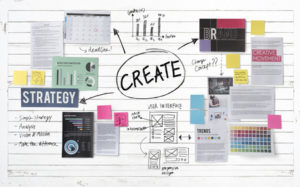 Create a vision board. A vision board is just not a collage pretty pictures; it is something that allows your mind to expand. It is a collage and not a piece of art. I do not want you to frame it and thinking this is beautiful. I want you to use it as a tool and then set goals based on what is on your board. Break your goals down into smaller pieces. Check out of goalsetting and make plans to start taking action toward what it is you truly want to happen to those possibilities actually making them become reality.
 Appreciative Living is appreciating your life. It is about appreciating the BEST in the present moment. What are 2 to 3 of your best experiences that you’ve experienced recently? Think about who was involved. What made it so great? Today’s podcast is more about asking questions. It is about getting you to reflect so grab a journal or piece of paper. I want you to take some time to think about this. Of course, I don’t want to do this while you’re driving but I would like you to re-listen to this podcast will make sure that we will not make it go too long today. I want you to take another listen to some of the questions, I will repeat a few things here as I really want you to pay attention.