Podcast: Play in new window | Download
Subscribe: RSS
DKI EPISODE 14: APPRECIATIVE LIVING
Appreciative living …I like to refer to is appreciative living as living the sweet life. No matter where you are whether you’re driving right now or just kicking back at the end of your day or you’re kicking off your morning, I am so glad that you’re here to join us today. I want to share appreciative living with you. I am certified as the appreciative inquiry facilitator. I want to tell you a little bit more about the process and what it means to me and how it can apply to your life, in your business, and to your organization.
Appreciate is a verb; it means “to recognize the quality significance or magnitude of – appreciating their freedom. The second definition I found on dictionary.com is “to be fully aware of or sensitive to; realize –I appreciate your problems.” The third definition is to be thankful or show gratitude for – I appreciate your help.”
According to David Cooperrider (the Father of Appreciative Inquiry) and Diane Whitney, and The Change Handbook, “Appreciative Inquiry is the cooperative search for the best in people and their organizations, and the world around them. It involves systematic discovery of what gives the system “life” and when it’s most effective and capable of economic, ecological, and human terms. Appreciative Inquiry (also known as AI) involves the art and practice of asking questions that strengthen the system’s capacity to heightened positive potential. It mobilizes inquiry through crafting “unconditional positive questions” often involving hundreds and sometimes thousands of people.” It is a very powerful approach to shifting the way people think about things the questions they ask.
During my practicum, one of my greatest learnings was that when people complain about a situation. This is an opportunity to take a step back. What I learned – you know these people are still complaining about this process and you try to explain it to them. It was not the process that was the issue it was how they felt about their environment and how the organization was approaching things. I went back to my trainers, I learned that when people are complaining about something we take a step back and re-frame the question so that they understand it’s a positive question. Allow them to vent for the moment and then say, “I can see that you have a vision of what the ideal would look like; I would love for you to tell me more.” You can you lose their complaint and re-frame it into an unconditional positive question so they can share with you what they see what is the vision that they see as possible. You might have some extra fruit some labor.
Appreciative Inquiry is not a traditional approach.
“The traditional approach to change is to look for a problem, do a diagnosis, and find a solution. The primary focus is not on what is wrong or broken; since we look for problems; we find them. By paying attention to problems, we emphasize and amplify them.”– Sue Hammond, The Thin Book of Appreciative Inquiry
Whatever you focus on expands; your primary focus should be what is working. What I love about Appreciating Inquiry, it allows you to really think about the possibilities. Our next podcast is actually talking about imagining the possibilities. What you focus on you get more of, so it really important to think about what it is that you want.
What are the best experiences you have had in your life so far? With Appreciative Living, the belief is that we do not just experience reality that we create that reality through our conversations with people, the way we think, and how we interact with others. Think about your interactions, you helped create those experiences. If you’re experiencing tension, you can also create a way to have greater peace in your life by approaching it and finding out some of those assumptions that you’re making. It easier to ask someone if your perception is correct than letting something gnaw at you for a couple days. Your thoughts influence how you act around those people.
APPRECIATING THE BEST IN THE PRESENT
 Appreciative Living is appreciating your life. It is about appreciating the BEST in the present moment. What are 2 to 3 of your best experiences that you’ve experienced recently? Think about who was involved. What made it so great? Today’s podcast is more about asking questions. It is about getting you to reflect so grab a journal or piece of paper. I want you to take some time to think about this. Of course, I don’t want to do this while you’re driving but I would like you to re-listen to this podcast will make sure that we will not make it go too long today. I want you to take another listen to some of the questions, I will repeat a few things here as I really want you to pay attention.
What are 2 to 3 of your best experiences that you had recently?
Who was involved?
What made it great?
What are three things you are grateful for today? (even if something has tragically happened) What can you appreciate about the people or the situation? With all situations, there is a good and there is a bad. Without being humble, I want to share with us or just in your own notes:
What are your strengths?
What are your three core values?
What do you stand by?
The next question is:
How do you add value to those around you?
I also want you to think about – What is one of your greatest accomplishments?
I would love to hear what your best experience is and what is your greatest accomplishment so please e-mail me at Debra@debrakasowski.com and I would love for you to share them with us.
What is the value that you bring – your core values, and your strengths?
What are the 2 to 3 of your best experiences?
We can all learn from this.
What do you value in your life the most right now?
Thinking about – What are you bringing to the world?
IMAGINE THE POSSIBILITIES
When you think of appreciating your life and think about an image or symbol that comes to your mind.
What image or symbol comes to mind for you?
What affirmative or powerful statement reflects that image or symbol for you?
 One of the most powerful words for me in my life is the word, “BELIEVE” and I’m not exactly sure what it is but when I see that word anywhere I gravitate to it. I’ve had people send me Christmas cards with BELIEVE on it (and I frame it). One of my favorite movies is The Polar Express where only those who hear the sound of the bell, the Christmas Bell, believe in Santa and that he was real. When you have no belief, this demonstrates that something can be possible when people think things are impossible.
Think of your theme. What is your word? For some people, it’s resilient. For other people, it’s courage. For me, the word is “believe”.
If you could have three wishes right now, let’s say you have Aladdin with the genie lamp, you can give it a rub, and you can have three wishes what would those be?
Take a moment to close your eyes. Make sure you are NOT driving a car, of course, do this when you have an opportunity to actually do this.
Visualize your future.
What do you want to create?
What would your perfect day be like?
Would you want to be: more resilient? More open-minded? More creative and innovative? Delve into personal growth? Be willing to take a risk? Have more resources available to you? Give your life a whole new energy?
What I want to encourage you to do is to take the time to dream. This is why is very important to have some downtime to connect with family, go for a walk in nature, get out of the busyness of the world. You need to reconnect with who you are.
ACT IN ALIGNMENT
How do you need to show up to make what you want happen?
What conditions need to exist?
What three things must you start doing today to get to that perfect day?
What must you stop doing?
 Take out a piece of paper (or the download) and it is usually just use one page but if you need to you can do it longer. I want you to sit down and write out everything from the moment you wake up to the end of the day. What would be your ultimate perfect day? Who would be there? What would you be doing? What are the things that need to be in place for these things to happen? I often hear people say many different comments about this exercise, but most of all, the biggest ah-ha that has is that they have never given themselves permission to dream. Some people do not realize that they’ve already been living some of those things already and doing some of the things that they truly love. If you’re not in that space, this exercise is even more important for you for you to really dig down.
Think about what it is it you truly want and if you can have a perfect day what would that look like? Who would you be with? What would you be doing? Where would you be going? How would you do some of those things?
By engaging in Appreciative Living and creating the Perfect Day, you will be living as the Italians say, “Dolce Vita”. Dolce Vita means living the sweet life. Why not – live it here and now. It’s a matter of making a choice and thinking about making a change with one action in your thinking or behavior that you are you willing to take so you can create that upward spiral to your best future.
“Appreciation can make a day even change a life; your willingness to put it into words is all that is necessary.” Margaret Cousin [Quote Block]
There are just a few things that you could think of doing to make your life richer from the inside out: trying new things, learn a new language, play an instrument, join a team, check out of meetup group in your area, create a portfolio or a WINS file where you keep track of your successes, and gather collection of things that make you feel good whether their pictures symbols – whatever we might be.
Share your powerful story with others. As you create the story (that you share with others), you want to create that most positive future that you appreciate and live in every moment. It begins with how you share your story with other people. Are you speaking about possibilities and Do you want to live the story you are living right now? If you’re questioning it or you wanted to be richer, you can do that, it all begins with a choice.
First, you must be really clear on what that looks like and what is it that you truly want. Are you willing to put in the effort that it takes to get there? There may be sacrifices. Are you okay with them? There can be consequences with every choice. Something that we get and sometimes something that we have to give – in the end, it was all worth it! Dolce Vita!
I hope that this pumps you up and gets you really thinking about how you can appreciate the present, imagine all the possibilities, and act in alignment with your truth, your values and live that perfect day.
I would love to hear about your perfect day so e-mail us at Debra@DebraKasowski.com Give us a five-star rating. Listen and subscribe to us out here on iTunes. Remember to be the change you wish to the world!
Sign up for our Newsletter www.debrakasowski.com
DEBRA KASOWSKI, BScN CEC is an award-winning best-selling author, transformational speaker, blogger, and Certified Executive Coach. She has a heart of a teacher and is certified in Appreciative Inquiry and Emotional Intelligence. Her writing has been published in a variety of print and online magazines. Debra Kasowski International helps executives, entrepreneurs, and organizations boost their productivity, performance, and profits. It all starts with people and passion. Sign up the Success Secrets Newsletter and get your free mp3 download today! www.debrakasowski.com
Time 17.08 min


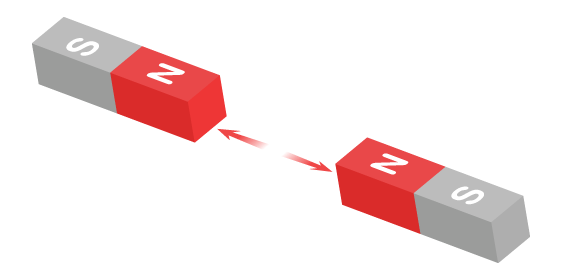 better first impressions- When you are speaking positive and you are excited about your day versus someone who’s got slouched posture saying “Hi, how are you?” (say it in the Eeyore voice from Winnie the Pooh). Do not put that energy out there. You don’t want to be around them. You start to repel is like a magnet. You just want to walk away from that negative energy.
 Get Rid of or Cut the Drama I don’t like drama. One of the things that I’m telling about the drama part is, if something is not broken – with a relationship or you have some negative thoughts about something. Don’t jump in and start accusing somebody of something and getting into petty fights. A lot of the disagreements the people get into are over the little things that really don’t have a lot of significant. If you just open up the conversation, you find out that it’s not as difficult or a conflict as you what you thought it was.
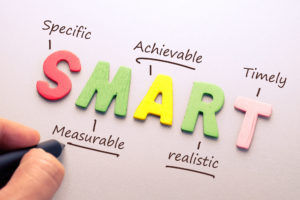 Set Meaningful Goals. Many people out there don’t set goals. Only the top to 3% of people, set goals on a regular basis. When you set goals for yourself, you want to use the SMART goal method which is: S – Specific, M- Measurable, A- Achievable, R- Realistic, and T for Timely. When you use this, what you trying to do is be specific, what is it that you want to achieve, what you want to achieve and by when the timestamp because without that it becomes a wish; it becomes a dream. It something that you’re not actually working toward so we will be able to measure it; give it a timestamp as to when you might want to do this by. It’s commitment. The next one is achievable. Is this achievable within the time frame that you are trying to do this? Is this something you can actually do? Is this realistic? Is it something you can do within the time frame you provided for yourself?R is for realistic. People say why not lose weight in 24 hours. As you can see that’s not very realistic unless you’ve undergone some type of surgery. It’s about thinking about if it is realistic in the time frame. Maybe you need to adjust your time frame or test it out and then re-adjust- it happens. Timely, we want to be able to measure it. We want to go back to the time date stamp as to when you’re going to achieve it. Some people set goals that you cannot actually measure it’s not something they can measure per se.What I like to recommend is using a rating scale of 0 to 10, 0 (lowest point) is about how you’re feeling about a subject and 10 is that you are at the top of your game. Let’s say you are at a 5/10, and then you decide what actions you are going to take to go from a 5 to a 7/10 two weeks from now. Thinking about those strategies and what you need to have in place and who you need to connect with. These are how we say to breakdown and chunk down your goals. You have to really stop and think about all the things that can help you get to where you want to go. Work backward, so if you know where you’re going in the time frame, what are the steps you need to take? Break it down into smaller pieces thinking about the resources, how much time you need to a lot to it, and how much money might need to go into it. What are the resources? What is your grit power? What is the work that you need to put in to get this done? Maybe you are going to achieve it earlier and need to set a new goal to up your game or you might need to adjust some of the strategies.


 Sometimes, we have to make sacrifices based on what is important to us and what our priorities are. You might end up taking a staycation instead of a jet-setting vacation while trying to save money toward your goals. You might eat in versus eat out regularly with friends. You might take evening classes instead of going out for a drink after work. Whatever that might be for yourself but where your focus goes is where you able to manage those things so that you can work toward the goals that you want to achieve.